Review evidence with clarity.
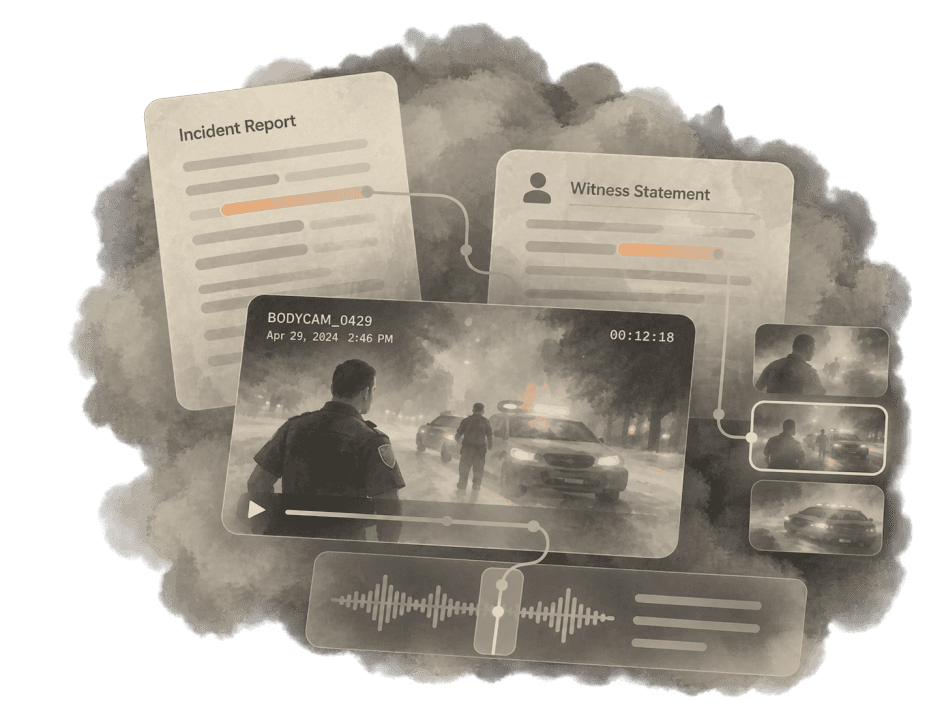
Compare reports against footage and jump straight to the moments that matter.

Why it matters
Criminal cases are swamped with information.
One arrest can mean hours of video from several body-worn cameras, and a report that sums it all up in a page or two. Checking one against the other, moment by moment, takes time most defence teams don’t have.
evidently takes the first pass through the footage, so you can get back to the work that matters.
Under the hood
Computer vision that shows its work.
Three systems read the footage together. None of them decides anything on its own, and each leaves evidence you can check.
Pose estimation
YOLO11 finds 17 body keypoints on every person, ten times a second, and ByteTrack follows each person between frames. Movements like a raised arm become measurements the video model can check against.
17 keypoints · 10 fps · per-person tracking
Video and audio, together
Gemini watches the footage and listens to its audio in a single pass, with a clock burned into every frame, so each claim is tied to a time window you can play.
Native video and audio · timed windows
A second, independent look
Every flag is re-examined on a clean, narrow clip by a separate model call that never sees the first answer. If it doesn't agree, the claim is marked insufficient footage.
Clean clip · 5 fps · no shared context
Start with one report and one video.
A short clip is analyzed in a few minutes. evidently finds the moments that matter; you decide what they mean.
Upload files